

Get People to Communicate Better With One Another
One of the most critical problems in all workplaces across the world is communication and interpersonal relationships. People just do not seem to get along

One of the most critical problems in all workplaces across the world is communication and interpersonal relationships. People just do not seem to get along

Communication skills are very important when coaching your employees. There are a few key things that you need to keep in mind… Coaching is meant

Discussing taboo topics is like opening a can of worms- once you discuss it, you can’t ignore it. Taboo topics, if left ignored, can start

Communication skills in the workplace are a crucial element in effectively fostering a good relationship between management and employees. Coaxing employees to speak up about

Telling white lies is one of the most common practices in the office, despite the fact that it’s a known problem in business communication skills.

How often have you felt a surge of optimism and declared goals that reach for the sky? When the initial fire ebbs away and reality

Are you consistent about creating realistic and actionable goals for your company? A lot of business owners and managers set goals for their team without

It’s not surprising when people confuse business strategies with business plans. Many business owners still don’t know the difference between the two. Why is this

Managing change continues to be at the top of the corporate leadership agenda and is often seen as a core leadership development issue. We all

“Nothing is more permanent than change,” the old adage goes. Yet for employees, nothing can be more harrowing than corporate culture change. The office environment

There is so much going on at work and in our personal lives that employees are often on the verge of burnout and exhaustion. Stress

You can safely assume that there will be market crises that will affect your business from time to time. Running a business is far from

Customers are getting more aggressive these days. They try to use all the tactics they know to get what they want. In fact, lots of

The last several months I have been conducting workshops on sales training and helping design sales training programs for several companies. It’s been wonderful as

Sales are the driving force behind any company. And to make and improve your ability to make sales you must understand what it takes to

Are your marketing efforts focused solely on attracting new customers? In this article I share 3 ways to get more out of existing and loyal

If you think that sales skills are exclusively the prerequisites of sales people, you could not be more wrong. Why? Because each one of us,

What manager doesn’t want motivated employees? Absolutely every manager I have ever talked to asks me the same question: “How do I motivate employee performance?”

Gone are the days when manufacturers and business owners could neglect their product’s branding and still get a good profit. Back then, buyers really didn’t

In discussing the relevancy of culture to businesses, there is one mistake that lots of businesses make; thinking that the success of their establishment depends

You can’t pick up a magazine or book, read something on the Internet and realize how important good communication skills are in business. In fact,

Sometimes it is necessary for a company to consider terminating an employee during the probationary period. The probationary period is a crucial time when the

A consistent theme I notice for sales teams is that they simply do not do enough sales training. They train new salespeople on their products

Every business needs sales. That goes without saying. Yet I often find that sales people simply jump into a sales interaction without much thought as

Ask any boss what part of their job they dread the most and they’re likely to tell you that it’s about terminating key executives. It’s

Dealing with drunk and hung-over employees can be a tricky situation for any boss, so how does one deal with this in an effective manner?

Are sales and customer service the same? I bet you are saying no. Sales is what happens when someone buys and customer service is after

Being a successful sales person takes a lot of practice. Talking to people and persuading them to make a decision towards your product is tough

Anyone in the sales industry knows it is a full time job constantly finding new customers to keep your pipeline full. You have to cold

If you’re just like any consumer, the first thing that will always come to mind when deciding whether or not to buy a product or

Terminating an employee can be awkward, unpleasant and sometimes, scandalous. No one enjoys this process, even if the employee has been a royal pain. Unfortunately,

People in sales, especially ones early in their career reach out to friends and family as prospects. They spend a lot of time schmoozing with

When it comes to hiring and retention, you might be surprised to find out that a high percentage of sales managers still make bad hiring

In this video, Linda Finkle is asked by Dean Newland host of the Business of Intuition Podcast, in this world of AI becoming so prominent,

In this video, Linda Finkle is asked by Dean Newland host of the Business of Intuition Podcast, what do you think the workplace of the

In this video, Linda Finkle is asked by Dean Newland host of the Business of Intuition Podcast, what do you think is the role of

In this video, Linda Finkle is asked by Dean Newland host of the Business of Intuition Podcast, how do you help a CEO become better

In this video, Linda Finkle is asked by Dean Newland host of the Business of Intuition Podcast, can we create an environment where the whole

In this video, Linda Finkle is asked by Dean Newland the host of the Business of Intuition Podcast, how do show my team that I

In this video, Linda Finkle is asked by Dean Newland host of the Business of Intuition Podcast – how do I retain my employees and

Are you setting goals, or stuck in procrastination mode because you have set goals in the past only to not reach as many of them

Is strategizing the same as planning? We can all agree that strategizing and planning are part of running a successful business. In some organizations, strategic

Nobody wants to believe they are making bad sales calls. You psych yourself up to make sales calls, dial the phone countless times, and finally

Anyone doing sales for any span of time would agree that it is one of the toughest, trickiest businesses today. Dealing with people, winning their

Sales and prospecting go hand in hand, it’s important that even when someone says no, it doesn’t mean forever. Relationships are perhaps one of the

Every day we face having to make decisions. Why do some decisions come easily and others we struggle with; at times even avoiding making the

It’s not always easy making decisions. As a leader, you are often faced with many crossroads that will test your decision-making skills. Most of the

Employees look up to their leaders for guidance. As they say, actions speak louder than words, so what managers show their employees stay in their

Anyone in the corporate world would agree that leadership skills training is among the most popular topics discussed in books and seminars. And people love

One of the questions I am often asked when I do sales training is “how can I sell to every prospect?” My response is “why

Employees are the heart and soul of every successful business. Making employees’ concerns and welfare one of the top priorities of an organization is universally

The definition of employee motivation is defined as a high level of energy, dedication, and focus that employees bring to their jobs. Wouldn’t it be

The success of a company relies heavily on its employees. Companies can only survive and operate smoothly if the company goals complement the goals and

One of the most important keys to organizational progress and learning how to be successful in business is setting clear goals. Before you begin another

I am often asked, by my clients and other leaders, what’s the #1 secret to increase employee motivation? I wish I had an answer to

Have you ever wondered what factors affect how much employees dedicate themselves to work? These factors form what is called motivation. Motivation is a phenomenon

Is there an art to customer service? Does it exist in today’s world? How do you, as an individual, define good customer service? As an

When you read the phrase sales culture, what does that mean to you? When I ask folks I get responses like ’having our salespeople focused

You don’t want to let distractions keep you from successfully accomplishing what you set out to do. Having a plan is key to knowing where

Delegation is one of the most basic leadership skills, you need it if you’re to successfully manage a team or run a company. Leaders have
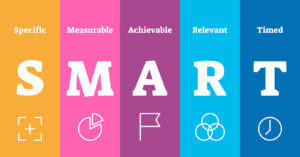
Effective goal setting will help get you out of feeling like you have to micro-manage everything because you want to make sure that the task or
Key Performance Indicators tell you how well your business is doing. Knowing what they are and how to use them will give you a competitive

Organizations spend so much time attending and sitting in meetings whether for reporting purposes, planning, meeting with suppliers, organizational meetings, brainstorming sessions, employee assessments… the

Are you a problem solver or a fixer? Do you pride yourself on being the individual people go to for answers or solutions? How often

Hiring and retention are two sides of the same coin. You know well enough that you need to invest time, money, and effort to recruit

Surprisingly enough, even good behaviors amongst your employees could lead to bad results. But how can this happen? Isn’t good behavior the foundation of every

As a leader, you should be knowledgeable in rallying your team through difficult times, and humble enough to know when you need help. Maxwell’s 5

If you’re a leader, I’m sure you’ve found that building a team is one of the most challenging tasks you could have. Building a team

Organizations strive to improve productivity and results. Though there are some great teams out there, many fail to produce the desired results because of the

We think of time management as the ability to do more, to be more productive, and at the end of the day or week to

Are sales and customer service the same? I bet you are saying no. A sale is what happens when someone buys and customer service is

With working professionals spending more than half their working time sitting in meetings it’s important to avoid wasting time in meetings. Meetings with clients, co-workers,

I found information on the SBA (Small Business Administration) website. It says that roughly 25 percent of small businesses never reopen their doors following a

Culture doesn’t just happen in a company. Ok I take that back, it does if you aren’t paying attention to it and don’t; focus on

When it comes to business planning we often use return on investment or ROI to determine if we are allocating our money in the best

4 communication skills that will turn that frown upside down when handling customers. I’ve said it before and I will say it again, communication

When I talk about the topic of communication, most people roll their eyes and quit listening. They have heard it all before, believe they communicate

If you hate negotiation, you are not alone. Even though this is a critical business skill, many people find it uncomfortable. They don’t like confrontation, and

Leaders are encouraged to know the answers. In fact, in some organizations, those who don’t or who aren’t willing to give their opinions are frowned

It can feel like it is difficult to prevent communication problems in the workplace…Every team goes through disagreements; you just can’t expect everyone to agree

When there is conflict at work we always believe it’s the other guy’s fault; your passive-aggressive colleague, the boss who is incompetent, the peer who

I work with a lot of people and companies on improving their communication skills. Whether a company or individual hires me because there is a
Let me ask you…do you think you need to improve your communication skills? Whether you realize it or not, words you use in conversations make

Don’t make the mistake of not discussing communication problems in the workplace that may be costing your company. You’re the boss, in most cases; your job

Effective communication in the workplace is a skill that a lot of leaders haven’t caught on to…yet. Why is it that the focus of leaders is

Nothing is more important in relationships, and for success in business than communication. Yet communication is a skill we don’t pay enough attention to developing.

The decisions you make can affect your business in many ways. But so does consistency, it touches every aspect of your business and can have

Looking for ways to effectively motivate employees and solve the tardiness epidemic that seems to be running rampant in your organization? Your company won’t succeed

Each of us wants to believe we are successful communicators. Truth be told, though, when things don’t work out as we expected we want to

Trends of a boss-free workplace have been circulating a few years now. Is it just a leadership fad popularized by tech and startup communities? Or

Treating junior employees as part of the family might work for some businesses; most success stories of such revolve around small businesses and restaurants. Some

The 6 signs you may be a dysfunctional company (or leader) is something we all need to consider…Nobody wants to believe they are dysfunctional, but
You’re doing a presentation of the marketing plan for a large project in front of your boss and a bunch of other guys from different
Resumes and Interviews The job of anyone interviewing is to paint the best possible picture of themselves to you, the interviewer. I read a statistic

Communication is one of the most complex topics of conversation, as it is a factor in almost every part of business. So, when we discuss

Everybody Wants Rock Stars I doubt there is a company around that wouldn’t want to hire the best talent possible (assuming you could afford it).

Of all your corporate assets, employees are the most valuable. It doesn’t matter whether you offer a premier product or service, if you are first

Top Talent is Difficult to Find Every organization wants top talent. We all want employees who are technically outstanding, great communicators, team players, have positive

The Advantages of Diversity Co-workers with diverse backgrounds bring unique experiences and perceptions to the table. This diverse knowledge and skills can strengthen the productivity
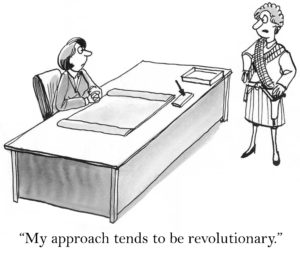
Exceptional leaders do many things better than good leaders. For the purpose of this article, I don’t think it’s necessary to define exceptional or make

It is an Incedoism that communication is both the root of all problems, and the solution. Poor communication leads to more issues than just about
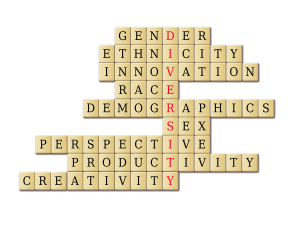
Dictionary.com defines diversity as variety, difference or unlikeness. That certainly covers a lot of ground. I want to talk about diversity from many angles so you

Every team needs to work well together. Success for any organization depends on this and every manager would love for this to happen organically. Yet

Many of us, by nature, are problem solvers, so our natural tendency is to step in and solve a problem when we see one. Others

This could be the topic of three or four articles because the topic itself is big AND there are many ways to look at getting

How does one go about training individual contributors to become managers? Do you send them to management training, suggest books for them to read, hope
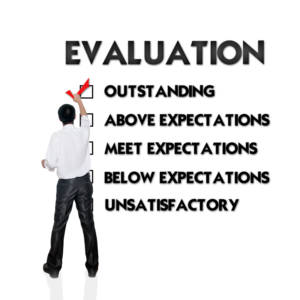
How do we move employees from good to great or so-so to good? One method is through performance reviews, and conducting a review that is truly
Every leader wants accountable employees. You want to know that you can count on them to do what they say they are going to do,
Sometimes micro managing seems like a necessity. You have employees who don’t follow through and others who never seem to produce the results you
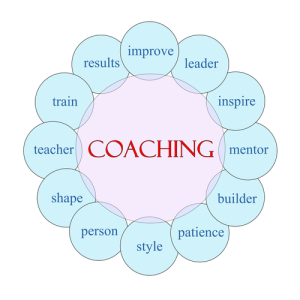
If you want high-performing employees you have to mentor, coach, guide, and advise. Athletic organizations have coaches whose role is to help their players be

Recently I was having a conversation with one of my daughters about what it takes to get ahead in life. It was a deep conversation,

When I was writing this article I found myself distracted. Distracted by my email, the phone ringing, people IMing me, some thought I had to

Recently I wrote an article on defining trust…what is it? It’s a big topic for me and as part of this I’ve been asking everyone

Over the last couple of months I keeping hearing the word ‘trust’ used. As in “I don’t trust my partner” or “How can I know

I guess this is my month for rants. Gosh I hope I’m not coming across as a complainer as that’s not the message I want
Life’s lessons are all around us if we take the time to notice them. I tend to pay attention and thus I suspect I’m attuned

Recently I hired someone to help me with a piece of my business I couldn’t manager myself. For two years I attempted to handle myself

Today’s business world is volatile and it’s often difficult to determine what we should do next. Just as the stock market seems to be moving
Got your attention, didn’t I? Now, I don’t mean what you are thinking; I mean the ‘F’ word FAILURE. Leadership in the workplace has to

So many organizations have remote teams, multiple locations, or employees working virtually these days. I want to state right up front that I have limited

When you improve your communications skills, the impact to your organization is huge. Why do I say that? Here are some examples of how improving

Leadership skill training often includes time management training because we all want to learn how to do more in the 24/7 week we have. Somehow

Leaders are encouraged to take action, sometimes with a limited amount of information. Risk goes along with making decisions without all the facts. Risk also

A couple of months ago I wrote a blog post on the topic of changing corporate culture. I almost always get 20-50 responses to every

A couple of months ago I wrote a blog post on why it’s necessary to improve your presentation skills. If you missed it, you can

Corporate team-building has moved away from hiring successfully, communicating skillfully, aligning expectations and holding people accountable, and veered into the realm of having fun. Don’t

I did a search on the Internet today for employee retention statistics. While I couldn’t find any statistics more recent than 2007, the results were
Faced with the chore of writing employee policies, many HR and business owners almost always find another urgent task that needs their attention. I know

Organizations are often in continual change mode, with some changes being more significant than others. Let’s face it…change is the nature of business today. Sadly,

Everyone knows that coaching employees is necessary for their own growth and the success of your company. And of course you should manage them and

What’s the one business leadership skill no one wants to be known for? It’s being a micromanager. Let me debunk this idea. I am so

The choices a leader makes not only affect the leader but impact others and the business they are leading. That’s why ethics are an essential

Everybody’s doing it, talking about poor communication skills and wondering how to get people in their organizations to improve. You can’t pick up an employment

Most everyone I know thinks communicating is easy. In fact, most of them believe it’s the other person, not them, that is the problem. If

Organizations are often in continual change mode. Let’s face it…rapid change is the nature of business today. Managing change is one of the key business

Because I work mostly with executives and business owners, almost every day I hear the same lament, “If only these people would listen.” Somehow we

FounderDating, a website designed to help entrepreneurs connect with each other for mentoring, business partnerships and JV ventures is gaining traction in the startup community.

What do leaders, entrepreneurs and Navy SEALs have in common? A lot actually. Guts, the desire for growth—perhaps you call it ambition, others will just

What do you think, should the boss be the smartest person in the company? If the boss’s IQ is an above average 130, does that

Recruitment and human resources has evolved over the years. Before, almost everything was done in paper: resumes, contracts, cover letters, memos, circulars, but now almost

Team building in the workplace is important but it’s not the solution to every problem in your company. Team building activities are there to help

As weird as it may seem, some people hate employee development and training. It’s weird, because, why would they hate training time when it’s actually

Wellness and development incentives always work better when monetary incentives are given. Studies show that cash is the best motivator for employees to participate in

What’s the first thing most entrepreneurs write when starting a business? A business plan. These plans are often comprehensive, detailing what they will do during

Family business succession planning may not be very popular, but it’s certainly picking up the pace. Mom and pop businesses are thriving and it’s slowly

Before you terminate an employee, there’s usually a common question that’s asked by lawyers and human resource managers: the age of the employee to be

When an employee resigns for whatever reasons, it is called employee turnover. It is a measure used by the management to evaluate the health of

Let’s get realistic here for a second. Do exit interviews really work? Yes, you can gather information about an employee’s decision to leave during an
According to one of the world’s leading financial management companies, Merrill Lynch, about 50% of an employee’s skills get outdated in 3 to 5 years.

Performance reviews help in the process of developing employees. It’s done regularly to ensure that managers are keeping track of employees as they grow with

I’m sure you often hear of companies making a significant profits, product advancements, or business expansions, and yet, are criticized by investors and Wall Street

Are your marketing efforts focused solely on attracting new customers? While it may sound logical to push for better customer acquisition, survey shows it’s not

All successful business strategies are founded on certain guiding principles, like Google’s famous maxim, “You can make money without doing evil.” Whatever your line of

Many entrepreneurs treat their business like their child, and like mothers, they have trouble letting go. They’re overprotective; they want to be involved in every

All businesses regardless of their size and market should have goals. This sounds obvious enough, but some entrepreneurs don’t take the time to focus on

You have a great product or service, and you know there’s a good market for it but the problem is there are at least a

It’s always a sad story when an employee leaves an organization. The hiring process entails investment in money, time, and effort but all these investments

Do you still remember your first week at your job? All those anxieties and expectations you had and how you had hoped to make friends

One of the most critical areas in recruiting new employees is the job interview. This is the first in depth encounter an HR personnel will
Wouldn’t it be nice to get a preview of how a person thinks before you actually hire him to work for your company? Let’s face

The applicant interview is the most critical part of the hiring process. After looking over an impressive resume, the next step is to look deeper
Perhaps one of the most alarming issues a company may face, whether big or small, is a high rate of employee turnover. Just imagine if

Many companies have to learn it the hard way—hiring a superstar employee may cause your business more harm than good. Recruiting new employees isn’t just

How happy are the people in your organization? Are they happy because they have a job? Or are they happy, as in happy? Do you

Many managers and business owners do not realize that an unorganized recruitment and hiring process can drain your company’s time, effort, and money. Often times

Being a likeable leader will make your job (and your life) easier. You may not want to admit it, but being liked by your team and

We’ve heard it all too often, managers assuring the organization that their employees are the most important part of the business. But why is it

One of the secrets of being a success leader is building strong alliances. No matter how seemingly good and experienced you are, or even if you

One of the best resources on leadership and management is the Internet. To develop your leadership skills, you can do self-study with the help of

I know most leaders have some sort of description for the way they do things, but how accurate is this description? Does it really capture

You want to be the best leader you can be, yes? I would be surprised if you said no. While no one is born with

So much has changed in this generation of corporate professionals, and the way we define leadership—work ethics, habits, and even leadership practices have drastically changed.

Executive coaching is no meager investment, and it does come with risks. Companies pay for executive coaching to hone the leadership skills of their senior

It’s time for a mid-year business evaluation and planning. This is when executives and leaders gather to discuss the organization’s accomplishments, challenges, and what if

You know the drill, people gather in the conference room to throw ideas together, to get the juices flowing so to speak. When a brainstorming

Negotiation is a skill that you can learn, it’s not an elusive skill given only to those who were “chosen.” If you want to start

Have you ever wondered why it’s so hard to communicate with other people? Do you often feel that whomever you were talking to didn’t understand

Hurricane season is upon us. Is your business prepared? Do your employees know what to do? According to the National Oceanic and Atmospheric Administration, we

The Challenge: You have a small or medium business, so you often lose top recruits to big name companies. Let’s face it; you can’t exactly

How far have we come since the good old days? Good business leadership has evolved; leading a team now is very different from what it

One of the elements often missing in the workplace is accountability. You find teams and departments working daily and performing their individual tasks without any

As a manager, your job description often goes beyond professional guidance. There will be times when you’ll need to provide a helping hand, or even

Welcome to the generation when leadership roles aren’t reserved for the fifty-something-executives. Yes, young professionals are now taking on leadership roles like they never did

A study conducted by Harvard Business School shows the potential risks businesses and stakeholders face when they’re easily attracted to short-term solutions or quick fixes.
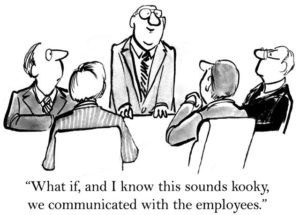
Communication problems in the workplace are inevitable. As organizations grow, communication becomes harder. When there were only a handful of employees, staff meetings were done

We’ve heard it over and over, seminars and books talking about teamwork and business communication skills, but just like many other business strategies it’s easier

Would you believe me if I tell you that, the most important part of the hiring and retention process is employee orientation? This is the

You’ve seen this all too often; your peers clawing their way to the top at all cost. In today’s corporate setting, selfishness has become more
Managers, employees, and business owners all feel the pressure to do more with less, especially with the cut throat competition in the market. Employees are

Gone are the days where the most powerful and most influential corporations reside in the first world countries like US and UK. Businesses are booming

Every manager is called upon to supervise their employees, make sure they are performing their job properly, and offer guidance when necessary. However, learning how

Attendance is often an issue for businesses; there will always be problematic employees who will be habitually absent. If you’ve been managing people for a

Every employee needs some sort of motivation every now and then, and in the corporate world, this is best done through reward system. Employee job

One of the best tools great leaders use to help their staff grow is questions. Yes, questions, not just trivial questions, but questions that matter.
Employee promotion isn’t only about a salary raise or a change in position name, a promotion means bigger responsibilities, managing people, and taking on more

You can be the best manager you can be and still your employees would have complaints about you. That’s just how life is. You can’t

Employees have their weaknesses and bad habits. Some are likely to procrastinate; others have problems with coming to work on time, or are constantly absent,
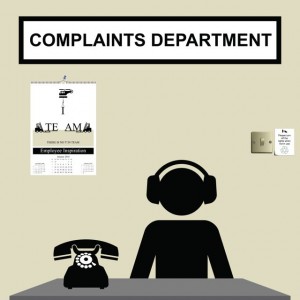
There may be no such thing as a perfect workplace, with perfect staff, and a perfect manager. An employee may start with a company completely

No one is born a leader. You’ve heard people say he’s a natural born leader, but actually, leadership skills are learned and developed over years

So much more is expected from managers and leaders today. You are supposed to be skilled leading people to get results. One of the most